01Walls that meet the ground, terraces, pool
Honey limestone
The stone Cyprus has always built with.
01Why
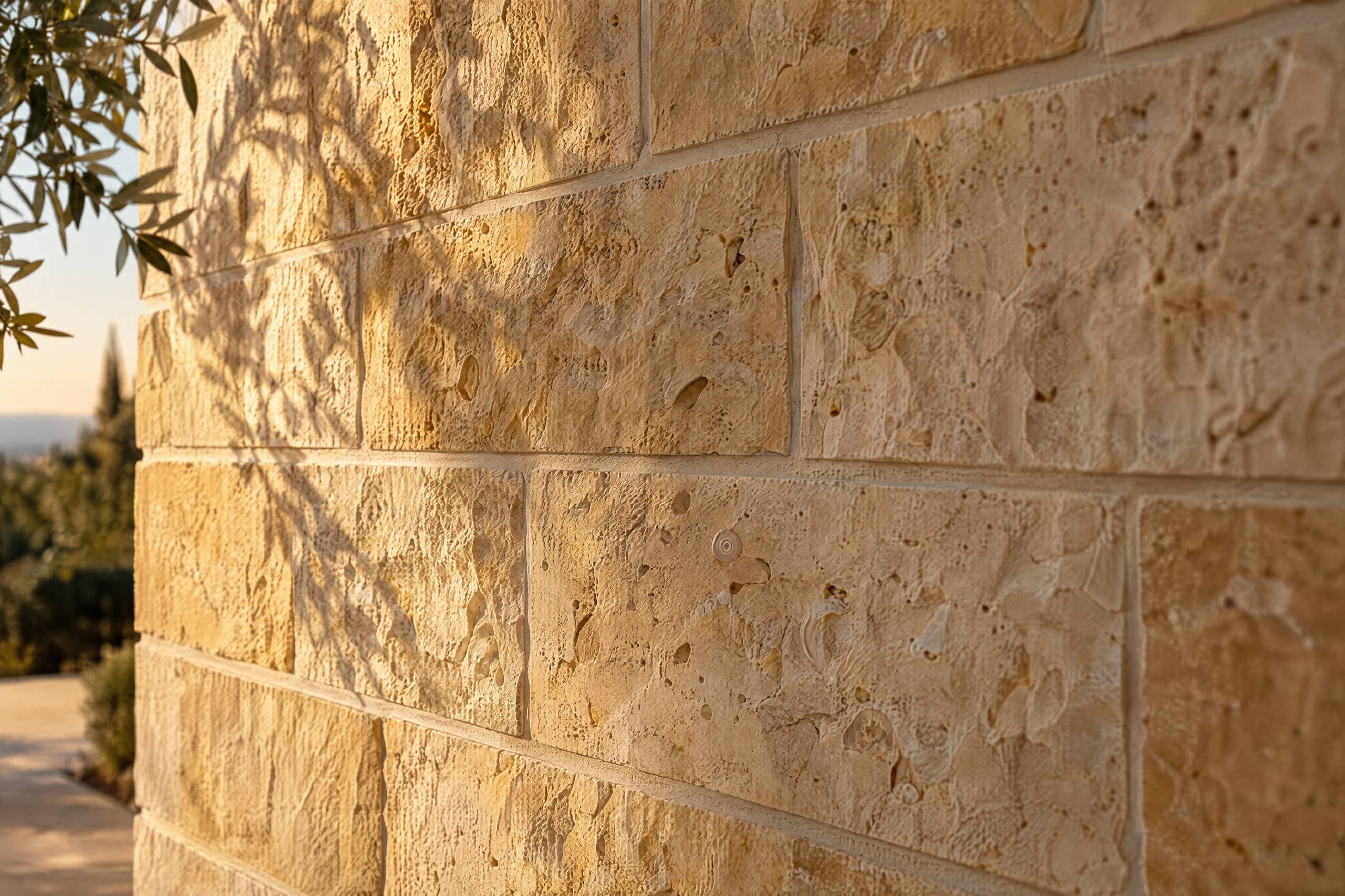
Honey limestone, the traditional stone of Cyprus, so that the houses are built of the island itself.
Pale cream warming to golden beige, honey limestone is the building stone of Cyprus: a soft, porous limestone of sand-fine grains — a calcarenite, to a geologist — that builders on the island were already shaping in the Bronze Age.
Paphos has always known it. The Roman city of Nea Paphos was built of the local limestone, down to its carved details, and a quarry of the period has been found near the town; and in the Laona, the hill country of villages to which Stroumpi itself belongs, several are stone-built to this day.
That is why it was chosen. The project asks for local and traditional materials, so that whoever lives here feels truly in Cyprus — not in a residential area that could be anywhere. Honey limestone says it before a word is spoken: it holds the terraces against the slope, anchors each volume to the ground and carries the warmth of the island’s own stone down to the water’s edge.
A porous stone, it does not stay new for long, and is not meant to. Sun and winter rain soften its faces year by year, into the quiet patina of the island’s old walls.
02Where
Where you will find it
- Retaining walls of the terraces
- Lower walls of the pavilions
- Walls of the pool
Elevation · Honey limestone highlighted. Schematic, after the Basic Project (DANA Arquitectos); indicative.
03Specification
Specification
- Stone
- Honey limestone, the traditional stone of Cyprus
- Colour
- Pale cream to golden beige
- Origin
- Cyprus
Further details are set in the finishes schedule, part of the project dossier issued with the final drawings. Request the dossier.
Enquire
Ask about the finishes.
Ask for the project dossier or a private presentation of Villa Idalia, and we will share the finishes as they are specified.
- info@hermeshills.com